
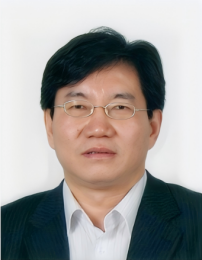
Fushuan Wen, IEEE Fellow, H-index 79
The Chinese University of Hong Kong, Shenzhen,
China
Prof. Fushuan Wen is a Research Professor at the School of Science and
Engineering, The Chinese University of Hong Kong, Shenzhen, and an IEEE Fellow for his contributions to
fault diagnosis in power grids. He has been a full professor and the director of the Institute of Power
Economics and Information at Zhejiang University from 1997 to 2025. His expertise lies in power system
alarm processing, fault diagnosis, electricity markets, and the application of artificial intelligence
in power and integrated energy systems. He has been undertaking various teaching, research and visiting
appointments in many universities around the world for over 20 years. He has published 400+ SCI-indexed
papers with more than 26,000 citations. He has been listed in "Most Cited Chinese Researchers" for 11
consecutive years since 2015 by Elsevier. He is the Editor-in-Chief of IET Energy Conversion and
Economics.
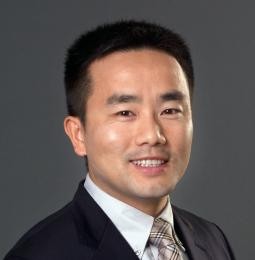
Chengbin Ma, IEEE Fellow, H-index 46
Global College, Shanghai Jiao Tong University, P. R.
China
Prof. Chengbin Ma is a Full Professor at the University of
Prof. Chengbin Ma is a Full Professor at Global College, Shanghai Jiao Tong University, P. R.,
1leading research in wireless power transfer, hybrid energy storage systems, and mechatronic control.
His expertise lies in high-frequency power conversion, battery management, and intelligent control,
with applications in electric vehicles, microgrids, and industrial electronics. He worked at the
University of California, Davis (2006-2008) as a postdoctoral researcher and at FANUC, Japan, as an
R&D engineer. He has authored >190 papers, with over 5,500 citations. He serves as Vice Chair of the
Wireless Power Transfer Technical Committee (China Electrotechnical Society), Chair of the IEEE IES
Shanghai Chapter, and Associate Editor for the IEEE Journal of Emerging and Selected Topics in
Industrial Electronics. He is a recipient of the AirFuel Alliance Research Excellence Award (2019),
the First Prize of the Science and Technology Progress Award from the China Power Supply Society
(2024), and was elevated to IEEE Fellow (Class of 2025). He is also listed among the Stanford Top 2%
Scientists (2020-2024).

Vincenzo Loia, IEEE Senior Member, H-index 59
University of Salerno, Italy
Prof. Vincenzo Loia is a Full Professor of Computer Science at the
University of Salerno, Italy, where he also serves as Rector. He received his Bachelor’ s degree in
Computer Science from the University of Salerno in 1984 and his Ph.D. in Computer Science from
Université Pierre & Marie Curie Paris VI, France, in 1989. His research focuses on soft computing,
agent and multi-agent systems, approximate reasoning, and knowledge extraction from unstructured
data, with applications ranging from medicine and law to cyber-intelligence. He has authored over
440 papers, with more than 10,000 citations. He is the co-editor-in-chief of Soft Computing and the
editor-in-chief of the Journal of Ambient Intelligence and Humanized Computing, and serves as an
editor for 14 other international journals. He also coordinates the scientific committee of the
"Multidisciplinary Observatory for the Fight Against Organised Crime and Terrorism". He is a Senior
Member of IEEE.
Speech Title: Agentic Lightweight Consensus for Resilient Monitoring and Control of Modern
Data Centers in Smart Cities
Abstract:The digital services that define a smart city, from intelligent mobility and
e-government to urban IoT platforms and AI-based analytics, are ultimately delivered by data centers
operating across a computing continuum that spans centralized cloud facilities and a growing number
of edge facilities embedded in the urban fabric. According to the International Energy Agency,
global data-center electricity consumption reached around 415TWh in 2024, approximately 1.5% of
world demand, after growing by roughly 12% per year since 2017, more than four times faster than
total electricity consumption. It is expected to more than double to around 945TWh by 2030, driven
largely by AI workloads. This footprint is concentrated where digital infrastructure clusters. In
Ireland, data centers absorbed 22% of all metered electricity in 2024, up from 5% in 2015, while
metropolitan hubs are planning to introduce dedicated policies to govern the siting and expansion of
data centers. Data centers have accordingly been described as the material backbone of smart cities,
with their siting, energy demand, and heat emissions increasingly interacting with urban planning
and urban energy systems. Maintaining the observability and controllability of this infrastructure
in the presence of noise, faults, and deliberate deception is a structural concern for smart cities,
not merely a facility-level issue, because the consequences of a data center misreading its physical
state can extend to the urban services it hosts.
Modern datacenters, the backbone of smart-city services, are cyber-physical systems whose thermal,
power, and workload streams must ber econciled in real-time despite noise, missing data, and
deliberate deception. In This talk we propose a two-path agentic architecture evaluated in
simulation over public, real-derived telemetry. At every control tick, a deterministic fast path
validates sensor reports through a lightweight fuzzy-consensus operator (FPR-OWA), a monitored
consensus-reaching process (CRP), and a deterministic verifier. A sparse, event-triggered slow path
allows a reactive or LLM-based supervisory agent to propose high-level actions, each gated by the
same verifier before actuation.